Installing Solar Power Systems on RVs in Dallas, TX
Solar panel installation on RVs in Dallas, TX converts sunlight into usable power for extended off-grid camping while reducing reliance on generators and shore power connections.
What Size Solar System Does Your RV Need?
System sizing depends on your daily power consumption, battery capacity, available roof space, and whether you primarily boondock or stay at campgrounds with hookups.
Calculate your daily power needs by listing all devices and their usage hours. Air conditioners require large systems beyond most roof capacities, but lights, fans, water pumps, and electronics typically need 400 to 800 watts of solar panels with adequate battery storage. Larger Class A motorhomes have more roof space for extensive arrays.
If you mostly use campground hookups, a smaller system maintains batteries during travel and provides backup power during outages. Full-time boondockers need maximum solar capacity plus lithium batteries for deeper discharge cycles without damage.
How Do Solar Panels Mount to RV Roofs?
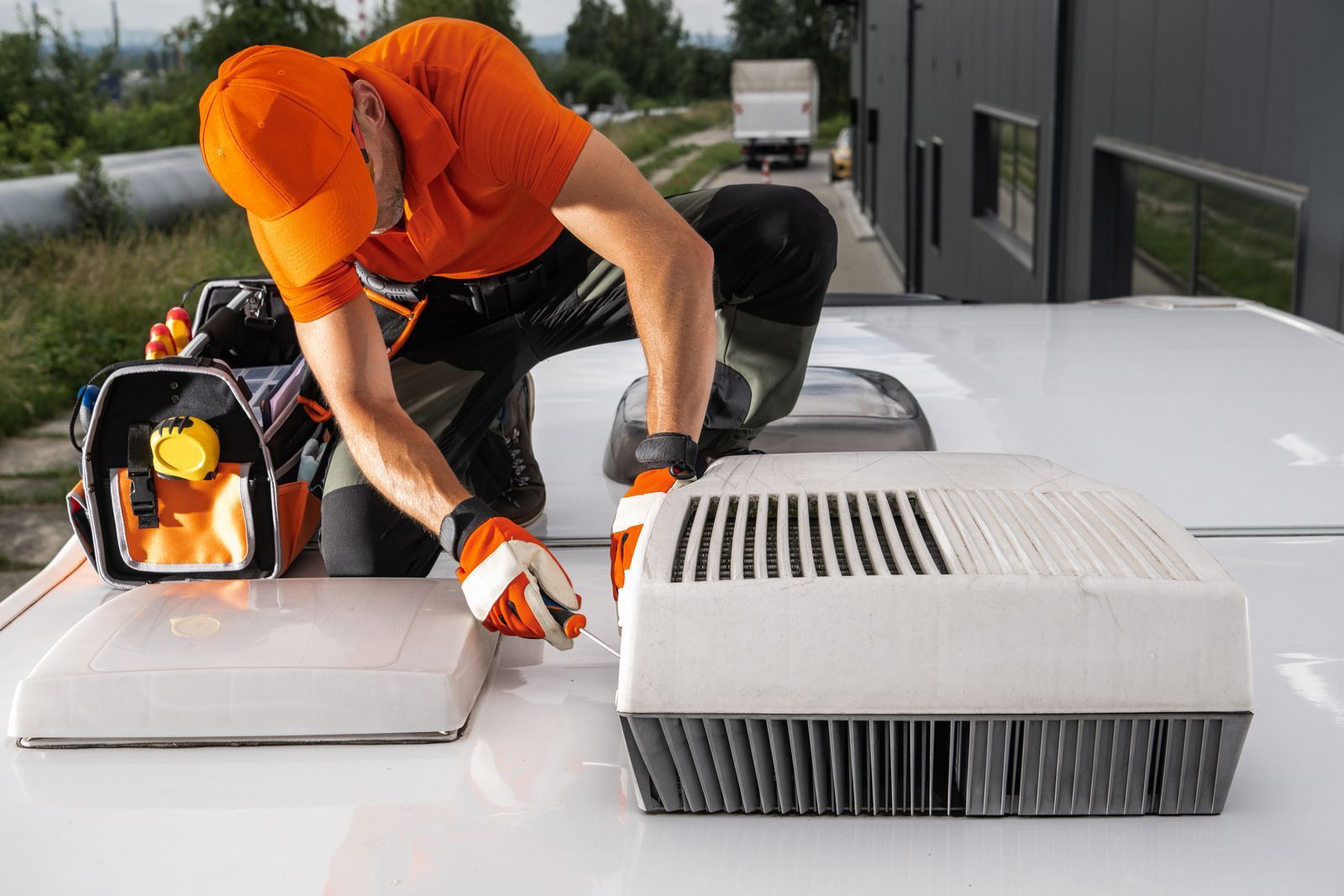
Panels attach using specialized mounting brackets, adhesives, or Z-brackets depending on roof material, with all penetrations properly sealed to prevent leaks into the vehicle.
Mounting methods vary by roof type. Rubber roofs use low-profile brackets that spread weight across wide areas to avoid membrane damage. Fiberglass roofs can handle through-bolt mounting with proper sealant. Aluminum roofs may use adhesive mounts to avoid creating corrosion points at fastener locations.
Wiring runs from panels through roof penetrations to charge controllers inside the RV. These entry points require careful sealing with appropriate sealants that remain flexible through temperature cycles. Poor installation creates leak risks that damage interiors.
Which Battery Types Work Best with Solar Systems?
Lithium batteries offer deeper discharge capacity, faster charging, longer lifespan, and lighter weight compared to traditional lead-acid batteries, though at higher initial cost.
Lead-acid batteries cost less initially but shouldn't discharge below 50 percent capacity without shortening their lifespan. This limitation means you need twice the battery capacity to get the same usable power as lithium. Lithium batteries handle 80 to 90 percent discharge cycles without damage, providing more usable energy from smaller, lighter battery banks.
Charging efficiency differs significantly between battery types. Lithium batteries accept charge faster, meaning your solar panels spend more time at optimal efficiency. Lead-acid batteries slow charging as they approach full capacity, wasting solar production during peak sun hours. For expert guidance on battery system upgrades in Dallas, TX , professional installers match components properly.
Can You Add Solar to an Existing Electrical System?
Yes, solar integrates with existing RV electrical systems through charge controllers that regulate power flow to batteries without overcharging or damaging other components.
Charge controllers prevent solar panels from overcharging batteries and damaging them. MPPT controllers cost more but extract maximum power from panels, especially important during cloudy conditions or early morning and late afternoon when sun angles are poor. PWM controllers cost less but waste some solar production.
Integration requires connecting the charge controller output to your battery bank, then connecting existing RV loads to the same batteries. Your converter continues charging batteries from shore power when available. The solar system works independently to maintain battery charge when camping without hookups.
What Solar Installation Challenges Exist in Dallas?
Dallas's intense summer heat requires proper ventilation around solar equipment, while severe thunderstorms necessitate secure mounting to prevent wind damage during storms.
High temperatures reduce solar panel efficiency, though modern panels handle heat better than older models. More critically, charge controllers and inverters generate heat during operation and need adequate ventilation to prevent overheating shutdowns. Enclosed compartments require ventilation fans for reliable operation.
Spring and summer thunderstorms bring high winds that can lift improperly mounted panels. Mounting systems must withstand sustained winds plus gusts without loosening or damaging roof membranes. Local installers understand these requirements and use appropriate mounting hardware for Dallas weather conditions.
Solar power systems expand your camping possibilities and reduce operating costs.
Explore your solar options with We Get Around RV Repair at 682-325-3825 to design a system matched to your power needs and travel style through reliable mobile consultation services in Dallas, TX.