
Water Dripping Where It Shouldn't Be
RV AC Leak Repair in Grandview for moisture issues around rooftop units and interior ceiling stains
Water pooling inside your RV near the air conditioner, stains spreading across the ceiling around the AC unit, or drips forming along interior trim all indicate that water produced during the cooling process isn't draining correctly. The service provided by We Get Around RV Repair addresses failed seals, clogged drain lines, and compromised rooftop gaskets that allow condensation or rainwater to enter the interior instead of draining outside. Texas storms combined with high humidity create conditions where even small seal failures quickly lead to visible water damage and mold growth inside cabinet spaces or insulation.
The inspection covers the rooftop gasket that seals the AC unit to the roof membrane, the drain pan underneath the evaporator coil, and the drain line that carries condensate away from the unit. Clogs often form where insects build nests in the drain outlet, or where dust and debris combine with moisture to create blockages that force water backward into the RV interior. Gasket failures occur when the rubber deteriorates from UV exposure and temperature cycling, creating gaps that let water flow under the AC unit during rain.
Arrange an inspection to identify the leak source and prevent further interior water damage.
How Leaks Develop and What Repair Involves
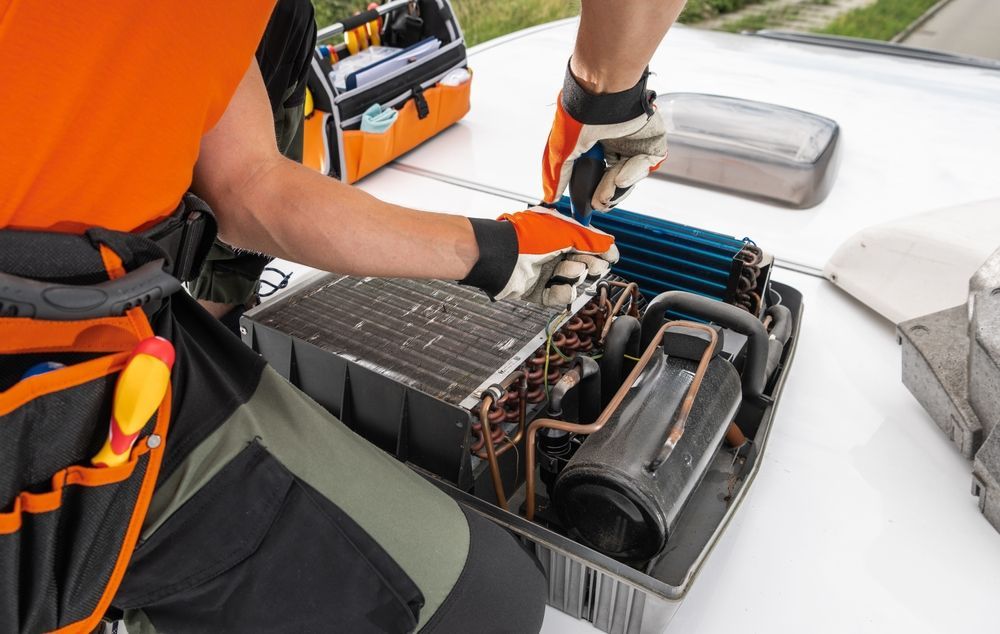
Condensation forms continuously on the evaporator coil during operation, and that water must drain through a dedicated path to the exterior—if any point in that path becomes blocked or if the drain pan develops cracks, water overflows into areas not designed to handle moisture. Rooftop seal inspection involves removing the AC shroud to examine the gasket for compression set, cracks, or separation from the mounting flange, then testing whether rainwater can bypass the seal during a controlled water test.
Once repairs are complete, condensate drains freely to the exterior without backing up, the ceiling remains dry after rain or extended AC use, and you no longer see stains expanding or smell the musty odor that indicates hidden moisture. The interior stays protected from the mold growth that begins within 48 hours of water intrusion, and the insulation around the AC unit remains dry instead of becoming saturated and losing its thermal effectiveness.
Leak repair includes clearing drain lines with compressed air or flexible tools, replacing deteriorated gaskets with properly sized seals that match the rooftop contour, and sealing any screw holes or penetrations where water has found alternate entry paths. The repair doesn't address structural damage that's already occurred—delaminated ceiling panels or rotted wood framing require separate restoration, but stopping the leak prevents that damage from spreading further.
Common Questions About RV AC Leaks
Leak sources aren't always obvious, and water can travel along framing or wiring before appearing at a location far from the actual entry point.
- What's the difference between a condensate leak and a rain leak? Condensate leaks occur only when the AC is running and producing moisture through the cooling process, while rain leaks happen during or shortly after storms regardless of whether the AC is operating—tracking when water appears helps identify which system has failed.
- How do you find the leak when water appears far from the AC unit? Water follows gravity and any available path, so the inspection traces backward from where drips appear, checking framing, wiring channels, and ductwork that might carry water from the AC area to where it finally becomes visible inside the RV.
- Can a clogged drain line cause the AC to stop cooling? Yes—if the drain pan overflows and water reaches electrical components or the control board, safety sensors may shut the system down to prevent electrical damage, so what looks like a cooling failure is actually a water management problem.
- Why do gaskets fail faster in Texas climates? Constant UV exposure, ozone, and temperature swings between extreme heat and air-conditioned cold cause rubber gaskets to harden and crack more quickly than in moderate climates, and gasket failure rates increase significantly after three to five years of continuous exposure in Grandview conditions.
- What should I check if I see water stains but no active dripping? Stains indicate water was present during a previous leak event, so the inspection determines whether the leak is ongoing but intermittent—occurring only during heavy rain or long AC cycles—or whether it's already been sealed coincidentally and the stain is simply residue from an earlier failure.
We Get Around RV Repair performs water tests after repairs to confirm leaks are fully resolved before closing up the AC installation. Schedule a leak inspection to stop moisture intrusion and protect your RV interior from progressive water damage.