
RV Air Conditioning Replacement in Greater Fort Worth Area for units beyond economical repair or nearing end of service life
New Cooling Systems Installed Right
We Get Around RV Repair proudly handles RV air conditioning replacement throughout the Greater Fort Worth Area, especially when your existing rooftop unit has reached a stage where ongoing repairs are no longer a financially sensible option. Additionally, this service is ideal for those considering an upgrade to a more efficient model that offers enhanced cooling capacity. You often face this pivotal decision when a compressor failure occurs on an older unit, when repeated refrigerant leaks lead to a significant decline in performance, or whenever your travel habits or RV configuration necessitate a quieter, higher-BTU system.
Replacing an RV air conditioner is a detailed process that involves not only removing the old shroud and base assembly but also thoroughly inspecting the roof opening for any signs of gasket deterioration or membrane damage that could affect the integrity of the installation. Once this is done, our skilled technicians will carefully seat a new unit that matches your existing cutout dimensions and adheres to your electrical requirements. Unlike relatively simple repairs, a full replacement provides you with a valuable opportunity to upgrade from a standard 13,500 BTU unit to a more powerful 15,000 BTU model, given that your generator and breaker panel can accommodate the higher amperage draw. Alternatively, you might choose to switch to a heat pump configuration, particularly beneficial if you enjoy camping during cooler seasons and desire dual-function climate control for maximum comfort.
Don’t hesitate to get in touch with us when your current AC unit begins to fail repeatedly or when you’re prepared to invest in a system boasting modern efficiency ratings and extended warranty protection. We are here to help ensure your RV remains a comfortable haven, no matter the weather conditions outside.
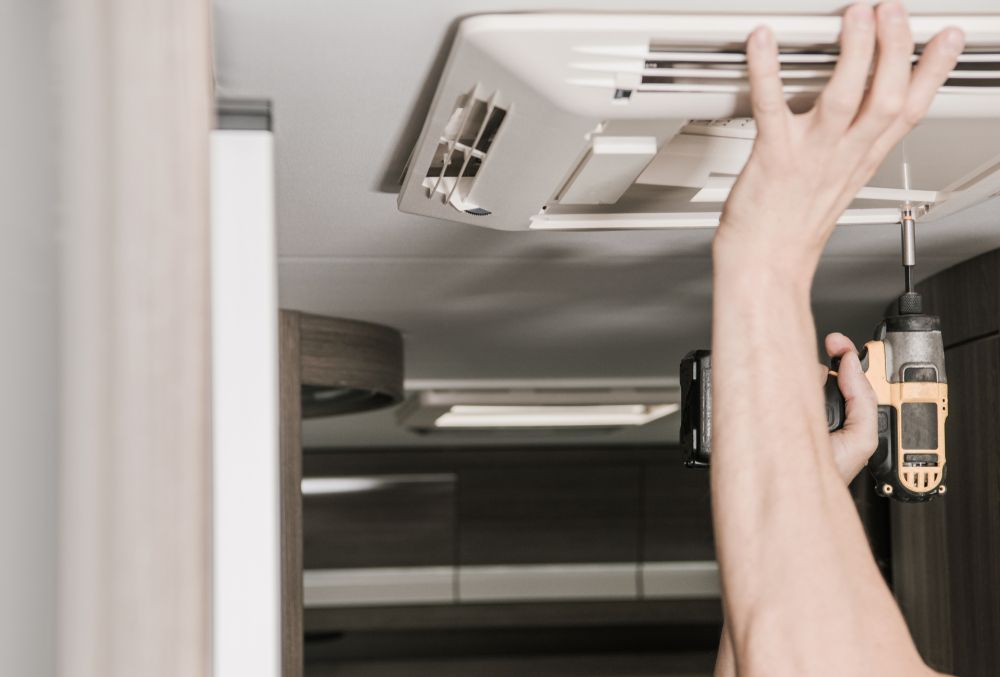
You'll watch as we remove mounting bolts and disconnect the existing wiring harness, then lift the old assembly off your roof and inspect the plywood base and rubber membrane for soft spots or weather damage that needs correction before the new unit goes in. We apply fresh butyl tape sealant around the entire roof opening perimeter, position the new unit to align with your interior ceiling assembly and ductwork connections, and torque all mounting hardware to prevent movement during highway travel.
Once the replacement is complete, your RV will cool faster and maintain more consistent interior temperatures, and you'll hear noticeably quieter operation if you've upgraded from an older single-stage compressor to a modern variable-speed model. We Get Around RV Repair ensures all electrical connections meet National Electrical Code standards for mobile applications and that the condensate drain routes properly to prevent water pooling under the unit.
We verify thermostat compatibility with your new unit's control board, test cooling performance at full load, and confirm the shroud sits flush with no gaps that could allow rain infiltration or create wind noise at highway speeds. Your old unit is removed from the site, and we provide all documentation needed for warranty registration and future service reference.
What Replacement Includes
Common Replacement Questions
RV owners in the Greater Fort Worth Area often ask these questions when considering whether to replace rather than repair their air conditioning systems.
- How do I know if my RV roof can support a new air conditioner? We inspect the roof decking and structural ribs during removal to ensure no rot or delamination exists, and we confirm the existing frame can handle the weight of modern units, which typically range from 80 to 120 pounds depending on BTU rating.
- What brands do you install for RV air conditioning replacement? We install Dometic, Coleman-Mach, and Advent Air units depending on your RV's roof opening dimensions, power supply capacity, and whether you need ducted or non-ducted configurations for your interior layout.
- Why does the new unit need to match my existing roof cutout? RV manufacturers use standardized 14-inch by 14-inch openings for most rooftop appliances, but custom or older models may require adapter kits or roof modification to accept modern units without creating gaps or structural weak points.
- When is replacement more cost-effective than continued repairs? You should replace when the compressor fails on a unit over eight years old, when refrigerant leaks require extensive coil or line repairs, or when you've spent more than 50 percent of a new unit's cost on repairs within two years.
- How long does a new RV air conditioner typically last? Most quality rooftop units provide ten to fifteen years of service with regular maintenance, though lifespan depends heavily on usage frequency, storage conditions, and whether you run the system on consistent shore power versus fluctuating generator voltage.
When repair costs mount or your current system can't keep pace with your cooling needs, contact We Get Around RV Repair to discuss replacement options that match your RV's electrical capacity and your budget for improved comfort on the road.