
RV Air Conditioning Repair in Greater Fort Worth Area for units blowing warm air or failing to start
Cool Air Restored When It Matters Most
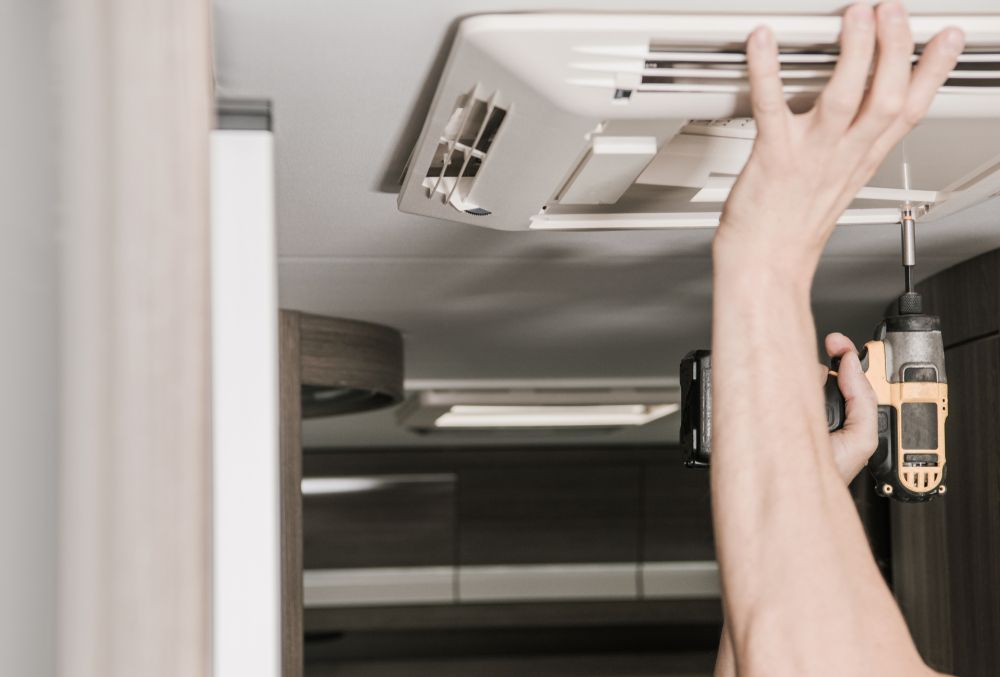
We Get Around RV Repair proudly offers comprehensive RV air conditioning repair services throughout the Greater Fort Worth Area, specifically designed to assist you when your roof-mounted or ducted AC system stops cooling effectively, begins cycling erratically, or fails to power on altogether—particularly during the sweltering summer months when relief is crucial. You and your family depend on your RV's climate control system to maintain comfort while traveling, and it's incredibly frustrating when that system malfunctions mid-trip or when preparing for storage. In these instances, it’s essential to enlist the help of a professional who understands the unique challenges posed by mobile refrigeration systems, which are subjected to constant vibration and temperature fluctuations.
RV air conditioners are engineered quite differently from standard residential units. They feature sealed rooftop assemblies that must endure highway speeds, the effects of thermal expansion, and voltage fluctuations that can result from using either generator or shore power. When your unit struggles to achieve the desired temperature, emits strange and unusual odors, or worse, leaks refrigerant onto your roof membrane, the underlying issues often stem from common problems such as compressor wear, capacitor failure, blocked evaporator coils, or damage to the control board. Given the extreme summer heat in this region, where temperatures routinely soar above 100 degrees, a malfunctioning AC system can swiftly turn your travel plans into an uncomfortable ordeal within mere hours.
If you notice that your RV's cooling performance has diminished or if you're hearing strange sounds emanating from the rooftop unit, please do not hesitate to reach out to us. We’ll be happy to schedule a diagnostic visit that accommodates your travel schedule or storage plans, ensuring that you can return to enjoying the open road without further hassle or discomfort. Your comfort and peace of mind are our top priorities!
You'll see our technician begin with a voltage test at the breaker panel and thermostat to rule out power supply issues before climbing onto your RV's roof to inspect the condenser fan, compressor amperage draw, and refrigerant pressures using gauges designed for mobile AC systems. We check shroud integrity, drain pan condition, and gasket seals that prevent water intrusion during travel, then test capacitor microfarad ratings against manufacturer specifications to confirm start and run components function correctly.
After the repair, your RV will hold steady interior temperatures even when parked in full sun, and you'll notice the compressor cycles smoothly without the labored startup or mid-cycle shutdowns that signal failing components. We Get Around RV Repair documents all replaced parts and refrigerant adjustments so you have a clear record for future service or warranty claims.
Most repairs involve capacitor replacement, coil cleaning, or control board updates, but some older units require compressor replacement or refrigerant conversion if the system still uses outdated R-22. We explain what caused the failure and what maintenance steps help prevent recurrence, including regular coil rinsing and seasonal voltage checks before extended trips.
How the Repair Process Works
Questions About Your RV Cooling System
These answers address the most common concerns we hear from RV owners dealing with air conditioning failures in the Greater Fort Worth Area.
- How long does a typical RV air conditioning repair take? Most repairs finish within two to four hours once we've identified the failed component, though compressor replacements or refrigerant leak repairs may extend into a full day depending on unit accessibility and parts availability.
- What causes RV air conditioners to fail more often than home units? Your rooftop unit endures constant road vibration, thermal cycling from storage to operation, and power quality issues from varying campground electrical systems, all of which stress capacitors, compressor mounts, and control boards faster than stationary residential equipment.
- Why does my RV AC blow cold initially then warm up after an hour? This pattern usually indicates a failing start or run capacitor that can't sustain compressor operation under load, or a refrigerant charge that's low enough to cause the system to short-cycle once coil temperatures drop.
- When should I repair versus replace my RV air conditioner? You should consider replacement when the compressor itself fails on a unit over ten years old, or when cumulative repair costs approach half the price of a new assembly with updated efficiency and warranty coverage.
- How do I know if the problem is the AC unit or the thermostat? We test voltage at both the wall thermostat and the rooftop unit's control board, then check for continuity in the wiring harness running through your ceiling, which helps isolate whether the fault lies in the cabin controls or the mechanical assembly.
When your RV's cooling system underperforms or stops working entirely, contact We Get Around RV Repair for a diagnostic assessment that identifies the root cause and restores reliable climate control before your next trip.